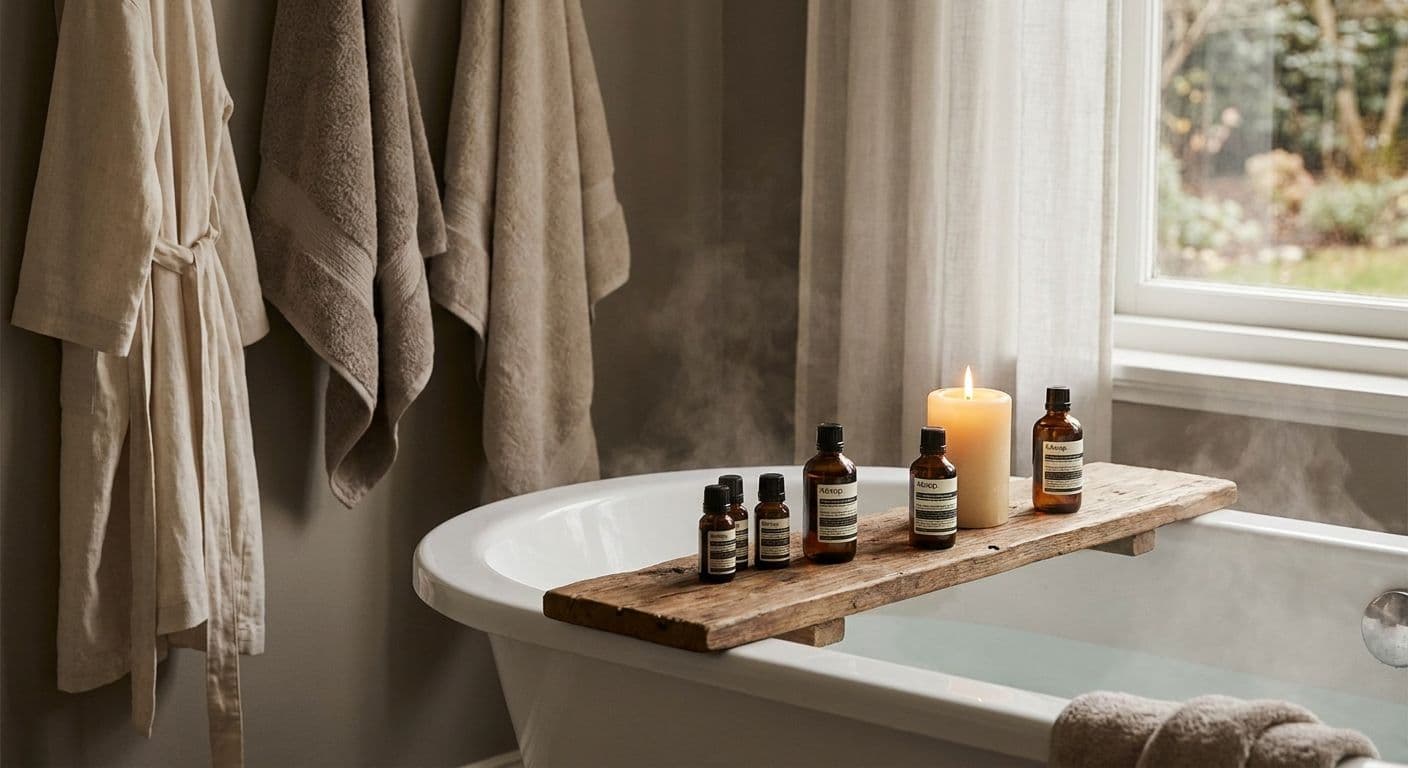
The Ritual: Shower, Scrub, Oil, Massage, Bath
The body you arrive in matters. A pre-pleasure ritual isn't self-indulgence — it's the difference between going through the motions and actually being present.
Ritual is technology. The purpose of a pre-pleasure ritual isn't cleanliness — it's transition. You are moving from one mode (doing, producing, performing) to another (receiving, feeling, being). The physical acts of the ritual — warmth, scent, touch — signal to the nervous system that the shift is happening. This is not woo; it's classical conditioning, and it works. The brain is remarkably good at learning associations, and every time you complete this sequence before an intentional experience of pleasure, that association deepens.
Why the brain responds to ritual
The science here is straightforward. Classical conditioning — the same mechanism Pavlov demonstrated — applies to human arousal as reliably as to any other physiological state. When a consistent sequence of sensory inputs (warmth, scent, the feel of oil on skin) reliably precedes pleasurable experience, the brain begins to anticipate. The ritual becomes a signal. Eventually, beginning the ritual is enough to initiate the shift. You don't have to wait until you're already in the mood. The mood follows the ritual.
The scrub — waking the skin up
Exfoliation is often framed as a skincare step. In this context, think of it differently. A good body scrub — hands, back, the often-ignored areas behind the knees and inner arms — does something that has nothing to do with pore size. It activates the skin as a sensory organ. Freshly exfoliated skin is literally more responsive to touch. The nerve endings that register pressure, temperature and texture are closer to the surface. You are calibrating your instrument.
The case for body oil
Self-massage with oil is perhaps the most underrated act in the body-care toolkit. The mechanism is partly chemical: slow, warm, deliberate touch activates the same oxytocin response as touch from another person. It's also pedagogical — it trains you to receive sensation, which is a skill, not a given. Many people have significant difficulty simply receiving physical sensation without doing something with it. Self-massage builds this capacity. Apply oil warm (heat the bottle briefly under hot water), slowly, including areas you habitually ignore: the feet, the scalp, the inner arms. Linger. The point is not to finish.
Temperature as a tool
Water temperature does more than feel comfortable. A warm bath raises core body temperature, which then falls as you step out — a drop that mimics the natural temperature shift the body undergoes when transitioning to parasympathetic (relaxed) mode. Hot water also acts as a mild vasodilator, increasing blood flow to the skin. A brief cool shower after heat — or simply stepping out into a cool room — sharpens that sensation further. The contrast activates the nervous system in a way that feels both energising and clarifying.
Scent: choosing deliberately
The olfactory system is the only sense that connects directly to the limbic brain — the emotional and memory centres — without passing through the thalamus. This makes scent the fastest of any sensory input to alter mood. A deliberately chosen bath oil or candle used consistently during your ritual becomes anchored to the state you're in when you use it. Over time, encountering that scent alone is enough to begin the shift. Choose something you genuinely like — warm, grounding notes such as sandalwood, amber, or neroli tend to work better than sharp or bright ones in this context.
Time and privacy as components of the ritual
These are not optional extras. An experience that might be interrupted at any moment cannot fully mobilise the parasympathetic nervous system. Some background vigilance remains — a low alertness that inhibits both arousal and depth of relaxation. Protecting uninterrupted time — communicating unavailability to housemates, putting the phone in another room, locking the bathroom door — is not indulgence. It's the prerequisite. The act of doing this also signals to yourself that what you're about to do matters.
The ritual is the foreplay
There's a useful reframe available here. Foreplay, as most people understand it, is something done immediately before the main event. Think of the ritual instead as extended foreplay — a 20 or 30-minute process of slow sensory preparation that arrives at readiness by a different route. By the time you step out of the bath, you've already done most of the work. You're warm, relaxed, in your body, and your nervous system has been carefully prepared. Whatever follows is arriving in fertile ground.