Getting in the Mood: A Practical Guide
Spontaneous arousal is a myth for most adults. Responsive desire is the norm — which means the environment and approach matter enormously.
Sex therapist Emily Nagoski's research established something that surprised many people: most adults — particularly, though not exclusively, women — experience what she calls responsive desire rather than spontaneous desire. Spontaneous desire is what you see in films: the sudden surge of wanting that arrives unprompted. Responsive desire works differently. The arousal emerges in response to the right context and stimulation — not before it. This is not a dysfunction or a deficiency. It is the normal pattern for the majority of people. Understanding it changes everything about how you approach getting in the mood.
The dual control model
Nagoski's framework describes a sexual accelerator and a sexual braking system that operate simultaneously. The accelerator responds to everything the brain codes as sexually relevant — touch, context, mood. The brakes respond to everything the brain codes as a reason not to be aroused: stress, distraction, self-consciousness, feeling unsafe, unresolved tension. For most people, the brakes are more powerful and more easily activated than the accelerator. Adding stimulation does not help when the brakes are strongly engaged. The path to arousal runs through the brakes, not just the accelerator.
Identifying your brakes
Everyone's brakes are specific to them. Common ones include: ambient stress or unresolved tension (the unread email, the conversation you're avoiding); physical discomfort in the environment; self-consciousness or body image concerns; feeling emotionally disconnected; being tired or unwell; feeling observed or pressured. The first step in getting in the mood is an honest audit of what is currently engaging the braking system. Some things can be dealt with. Others need to be consciously set aside. The distinction matters.
Creating conditions rather than forcing a state
The practical implication of responsive desire is that you cannot force yourself into arousal by sheer will — but you can engineer conditions that make it likely. Rather than trying to feel something, you set about removing obstacles and creating the context in which your natural response can emerge. This includes resolving outstanding cognitive load where possible; creating physical comfort; adding sensory cues associated with pleasure; and giving the process enough time. Responsive desire takes longer than spontaneous desire, and that is not a problem.
Removing cognitive load
Cognitive load — the ongoing mental processing of outstanding tasks and unresolved issues — is one of the most reliable brake engagers. It is hard to be present in your body when your mind is cataloguing what you haven't done. Strategies that genuinely work: process the most pressing outstanding items before you begin; use a brief transition ritual to formally mark the shift from work mode to personal time; communicate to others that you are unavailable for a defined period. These are not trivial steps — they make a measurable difference to what follows.
The transition ritual
A transition ritual — even a brief one — serves a neurological purpose: it marks a shift in state and provides sensory cues that anchor the new state. This might be as simple as a 10-minute shower, a specific playlist, a short period of intentional breathing, or changing clothes. The content matters less than the consistency and intention. Done regularly before intentional intimate time, even a small ritual accumulates conditioning value over weeks.
What context looks like in practice
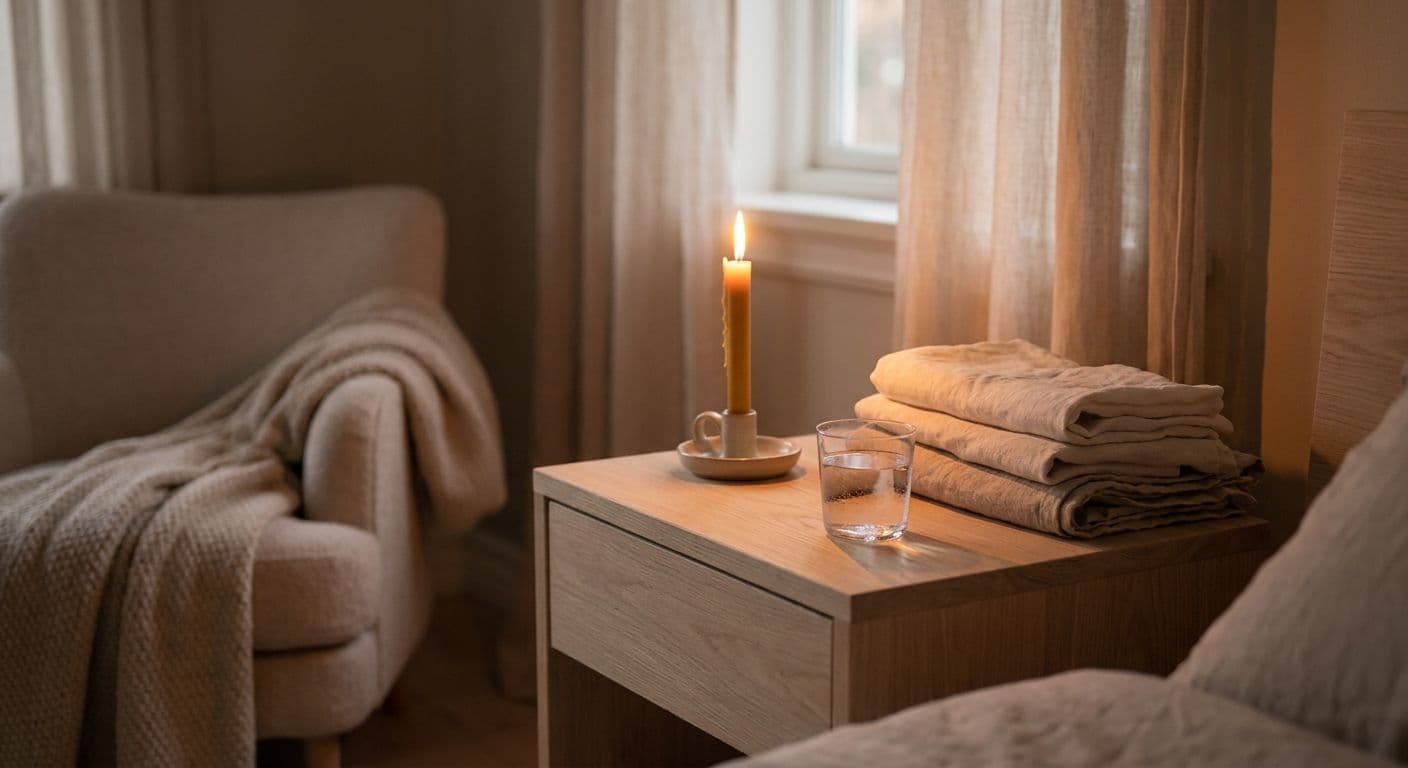
Context is specific to the person. There is no universal formula. But the building blocks appear consistently: privacy and enough time without the possibility of interruption; physical comfort in the environment; sensory cues associated with pleasure; a degree of physical relaxation; and emotional settledness — nothing acutely distressing pulling attention elsewhere. Survey your own conditions honestly. Most people know what they need but have rarely prioritised creating it with any consistency.
Time and patience as tools
Responsive desire takes time to emerge. If you allow five minutes and give up when arousal has not arrived, you have confirmed nothing except that five minutes is not enough. The window for responsive desire to activate is typically 15–30 minutes when conditions are reasonably good. This is not a problem to be solved — it is a characteristic to be accommodated. Building enough time into the experience changes the experience entirely. What feels like difficulty getting in the mood often resolves completely when sufficient time and the right conditions are both present.