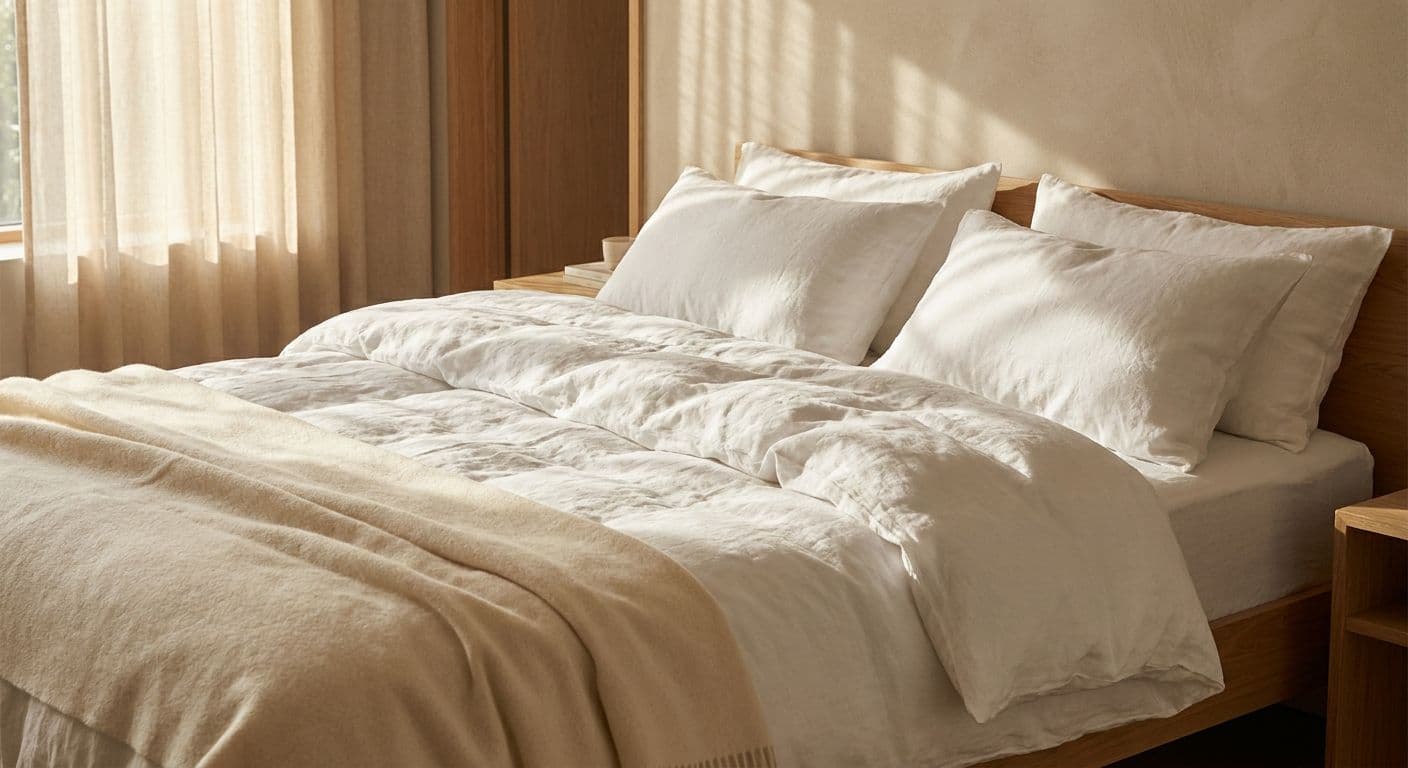
The Case for Fresh Sheets
Clean, quality bedding is not a luxury. It is the single most cost-effective upgrade to your intimate environment — and the science on why is interesting.
There is a specific feeling — anyone who has experienced it knows exactly what we mean — of getting into a bed that has been freshly made with just-washed sheets. It is disproportionately good. Not just clean: calming, slightly thrilling, expectant. This response is not arbitrary. It is the sensory system registering an environment that has been deliberately prepared. And that registration changes the quality of everything that happens in that environment.
Environment is active input, not background
We tend to think of environment as context — the backdrop against which experience happens. This is not quite right. The bedroom environment is not background noise; it is active input to the nervous system. Research on sleep quality consistently shows that bedding texture, smell, and temperature are significant variables. The same is true for sexual experience. A considered environment sends a signal: what is about to happen here matters. That signal changes how you show up to it.
The thread count question
High thread count matters, but not infinitely. The meaningful jump is from standard (150–200 TC) to quality (300–400 TC). Long-staple cotton — Egyptian or Supima — has a noticeably different hand feel: silkier, softer, cooler, and significantly more durable. Above 400 TC, you're often paying for marketing rather than performance. Linen is a different texture entirely — crisper initially, but it softens beautifully with washing and is substantially more breathable than cotton in warm weather. Both are worth trying; how you respond to texture is personal.
Temperature regulation matters more than most people realise
Sleep and arousal share an important physiological variable: temperature. The body's natural transition into sleep is accompanied by a drop in core temperature. A slightly cool bedroom — with warm, breathable bedding to settle under — supports this. Arousal involves a complex interplay of increased blood flow and raised skin temperature within an environment that allows heat to dissipate. Synthetic fibres trap heat in a way that disrupts both. Natural fibres regulate temperature rather than fighting it.
Scent is the dimension most people underestimate
The smell of freshly laundered sheets is one of the most reliably pleasant sensory experiences available. This isn't incidental — olfaction connects directly to the emotional brain, and the associations built up around clean bedding are deeply positive for most people. A good washing powder or liquid matters. Some people add a few drops of essential oil to a pillow spray. This is not fussiness; it's deliberate use of a powerful sensory channel. The right scent, encountered as you settle into bed, does something measurable to your state.
The frequency argument most people avoid
Weekly sheet changes are the standard recommendation from sleep hygienists and dermatologists alike. Sweat, skin cells, and sebum accumulate quickly — within days. Beyond hygiene, there is a simpler argument: the fresh-sheet feeling is too good to experience only occasionally. A weekly laundry routine becomes a weekly act of preparation — a signal to yourself that the bed you sleep in is worth maintaining. The hour it takes is paid back every evening for the following seven days.
Making the bed deliberately
There is a small but real pleasure in a well-made bed. Crisp folded corners, pillows arranged with intention, a top sheet or throw that looks as though someone cared. The act of making the bed sets a standard for the space — it's the domestic equivalent of a pre-game ritual. A bedroom that is clearly looked after sends the same signal as the fresh sheets themselves: this is a space worth taking seriously. When you walk in at the end of the day and the bed looks genuinely inviting, that matters. It changes what you bring to it.