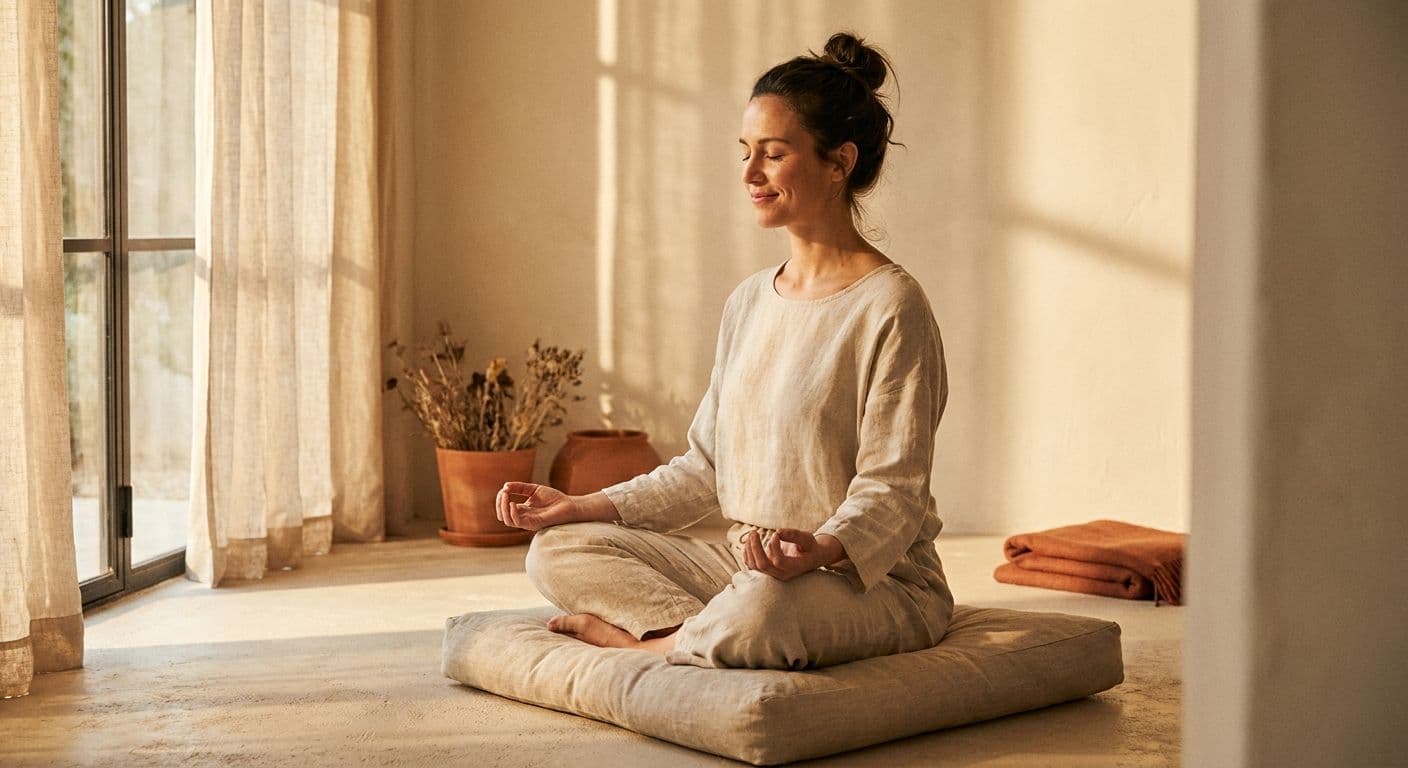
A Breathwork Primer for Deeper Pleasure
Breathing consciously is the fastest way to shift your nervous system state. Here's how to use it intentionally — before, during, and after intimacy.
Breath is unique among physiological functions: it operates automatically, without conscious input, but it is also the only autonomic function over which we have direct voluntary control. This makes it a lever on the nervous system that is always available — no equipment needed, no preparation required. Slow the breath, and the parasympathetic system activates. Deepen it, and oxygen delivery improves. Deliberately rhythmise it, and the heart rate follows. Breath is, in the most literal sense, the body's most accessible self-regulation tool.
Why breath matters to pleasure specifically
Sexual response is a physiological state, sensitive to the conditions of the nervous system in which it occurs. Arousal requires a degree of parasympathetic activation — the body's rest and digest mode — to proceed effectively. It also requires sufficient blood flow, muscular relaxation, and the kind of present-moment attention that is not available when the mind is running at speed. Breath regulation addresses all three simultaneously: it activates the parasympathetic system, improves peripheral circulation, promotes muscular relaxation, and by giving the attention something simple to track, anchors the mind in present experience.
The 4-7-8 technique for settling in
The most accessible breathwork technique for pre-pleasure use is the 4-7-8 pattern. Inhale slowly through the nose for 4 counts. Hold for 7 counts. Exhale fully and slowly through the mouth for 8 counts. Repeat three to four times.
The extended exhale is the mechanism: it activates the vagus nerve, the primary driver of parasympathetic activation. Within two or three rounds, most people notice a distinct shift — a settling in the body, a slowing of mental pace, a drop in background tension. This is not subtle and it is not placebo.
Box breathing as an alternative
For those who find the 4-7-8 pattern difficult — the 7-count hold is substantial — box breathing is a gentler alternative. Inhale for 4 counts, hold for 4, exhale for 4, hold for 4. The symmetry is easier to maintain, and the effect, while slightly more modest, is still meaningful. Box breathing is used by high-performance athletes and military personnel for stress regulation under acute pressure, which says something about its accessibility and effectiveness in demanding conditions.
During: the single most important instruction
The most impactful breathwork instruction for intimate experience is also the simplest: do not hold your breath. Breath-holding during arousal is extremely common — it's a tension response, a form of bracing. Many people hold their breath at the moment of orgasm or in the build toward it. Maintaining slow, full breathing through rising arousal prevents the escalation of sympathetic activation that breath-holding produces, maintains oxygen delivery to aroused tissues, and keeps the nervous system in the window that allows sensation to build rather than cutting it off. The effect on orgasm intensity is, for most people, significant.
The exhale as a release tool
The exhale specifically — long, complete, with a slight audible quality — signals safety and relaxation to the nervous system in a very direct way. This is the sound and mechanism of a sigh: the body's autonomous release of accumulated tension. Using deliberate, audible exhales during intimate experience accelerates the release of muscular holding and enhances sensitivity to sensation. This may feel unfamiliar at first. It isn't performative. It is the body's own release mechanism being used consciously rather than left to chance.
After: the importance of not rushing
The post-orgasm breath — the natural deep inhale and exhale that follows climax — is the body completing its stress-release cycle. Cutting this short by jumping up or returning immediately to normal activity interrupts the physiological reset that makes orgasm valuable as a stress-management tool. If circumstances allow, five minutes of slow, gentle breathing after orgasm allows the cortisol drop and oxytocin surge to fully take effect. The difference in how you feel an hour later is noticeable.